

What Spinal Decompression Can and Cannot Fix
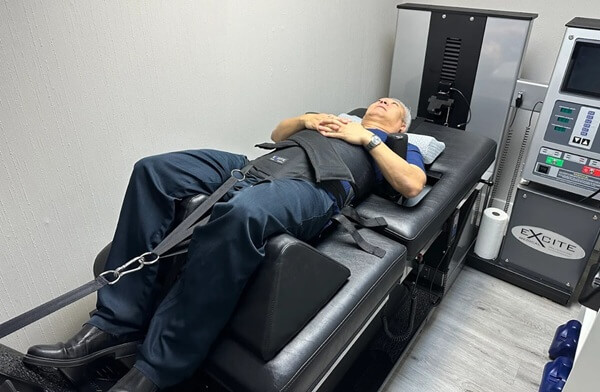
Spinal decompression gets asked about two very different things: serious disc problems, and whether it can make you taller. This article handles both, because knowing what a treatment cannot do is just as valuable as knowing what it can. Let us sort the genuine cases from the wishful thinking.
In this article
What Decompression Genuinely Helps
Decompression was engineered for one category of problem: a disc under pressure that is bothering a nerve. Within that category, it earns its reputation.
- Herniated and bulging discs, the headline cases. Lowering the pressure inside the disc helps it retract off the nerve it broke toward
- Sciatica, because that shooting leg pain is usually a lumbar disc pinching the sciatic nerve at L4, L5, or L5-S1
- Pinched nerves in the neck or back, along with the numbness and tingling they send down an arm or leg
- Degenerative disc disease, where the vacuum effect draws water and nutrients back into a disc that has been drying out, provided there is still disc height left to work with
- Neck pain from cervical disc compression, treated with the same principle and its own supports
Where the Honest Answer Is No, or Not Exactly
A trustworthy clinic is defined by this list as much as the first one. Decompression is not a scoliosis correction system, and anyone promising to straighten a spinal curve with a table deserves your skepticism. It cannot rebuild a disc that has fully collapsed to bone-on-bone, which is why x-rays come before any promises at Dallas Spine Center. And patients with certain conditions, from spinal fractures to severe instability, should not be on a decompression table at all, which is exactly what the screening exam exists to catch.
“The ideal candidates are patients with bulging or herniated discs without bone-on-bone degeneration. The exam and the x-rays decide the treatment, not the other way around.”
Dr. Hoa Nguyen, D.C.So, Will It Make You Taller?
Now the fun question, and it deserves a real answer. Yes, decompressing the spine temporarily restores a little of the height your discs surrender to gravity every day. It is the same reason you are slightly taller in the morning than at night, and why astronauts return from months in space measurably taller before their spines settle back down. Hang from a bar and you borrow a few millimeters for a few minutes.
Permanent height gain, though? No. The discs re-compress as soon as gravity resumes its shift, and no table, belt, or dead hang routine changes that. If a clinic is selling decompression as a height program, keep your money. The lasting change decompression offers is not inches on a wall chart, it is a disc that stops pinching the nerve that has been running your life.
What About DIY: Hangs, Belts, and Inversion Tables?
Dead hangs, decompression belts, and inversion tables all borrow the same instinct, and as instincts go it is not wrong: stretching a compressed spine feels good. The limitation is precision. Your grip gives out long before a disc changes, a belt cannot target a spinal level, and an inversion table applies the same crude stretch to every structure at once. None of them can calculate a pull from your body weight, cycle it the way the research describes, or know when your case needs an MRI instead of more stretching.
If your back simply feels tight, stretch away. If a disc is genuinely pinching a nerve, get the real version. Start with our plain-English guide to how it works, then see how the full protocol runs on our spinal decompression page.
Find Out Which List Your Back Is On
The $47 first visit covers the consultation, exam, and digital x-rays that show whether your problem is one decompression genuinely fixes. If it is not, we will tell you that too.